
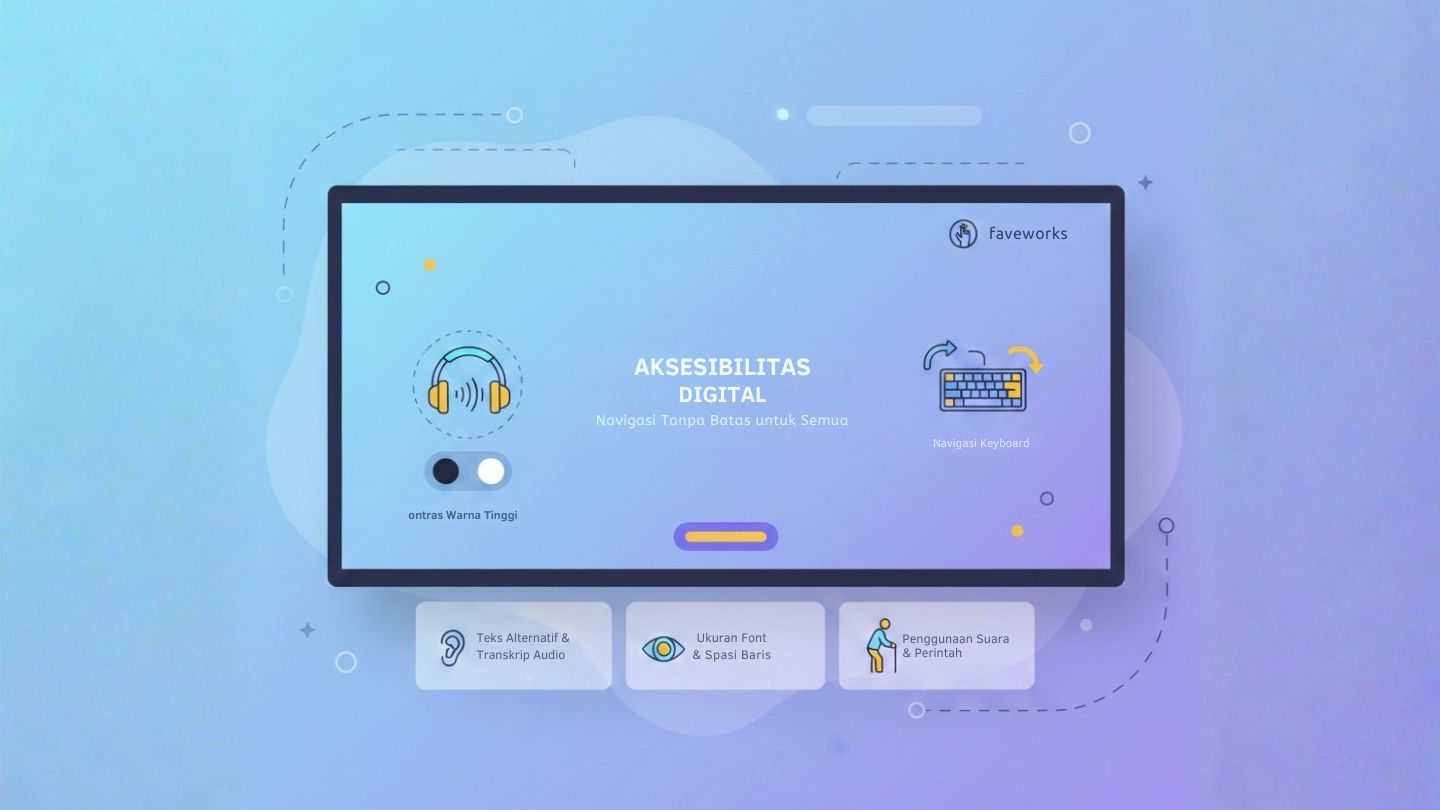
Web accessibility is a fundamental practice that makes sure your site can be used by everyone, including people with disabilities. It is not just a tech trend. Web accessibility improves SEO performance and widens your audience reach significantly.
Table of Contents
“Digital accessibility is the bridge that connects information with every individual without exception, creating an equal space on the internet.”
What Is Web Accessibility and Why Does It Matter?
Technically, web accessibility makes sure no one faces barriers when interacting with a website. It involves assistive technology like screen readers that convert text to speech for blind users.
Using correct semantic HTML helps all users. Think about watching a video in public without earphones: transcripts or captions are very useful. This is part of digital inclusivity that improves the overall UX.
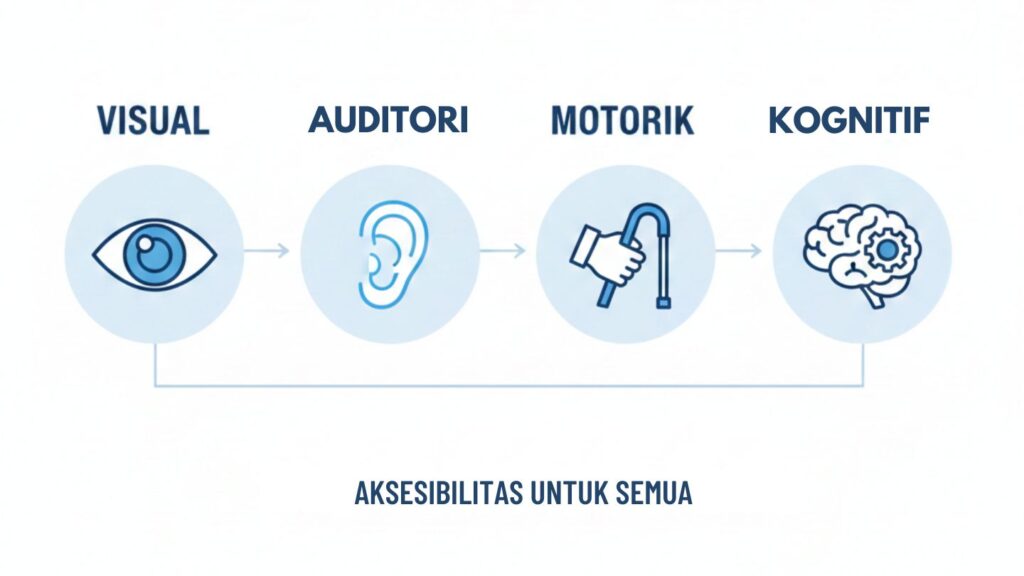
| Accessibility Category | Key Element | Target Users |
| Visual | Color contrast & font size | Visual impairment & older adults |
| Auditory | Alternative text (alt text) & captions | Deaf or hard of hearing & noisy environments |
| Motor | Keyboard navigation (Tab-friendly) | Physical disabilities & mobile users |
| Cognitive | Logical content structure | Dyslexia & concentration difficulties |
Why Is the WCAG Standard a Priority for Google?
Google’s mission is to organize information so it is universally accessible. The WCAG 2.1 standard is a technical guideline their algorithm likes. Using the right ARIA attributes is the key to success.
A simple example is adding alt text to images. Besides helping users with disabilities, this element gives Google valuable context for understanding image content, directly strengthening your technical SEO.
An Easy Way to Start an Accessibility Audit
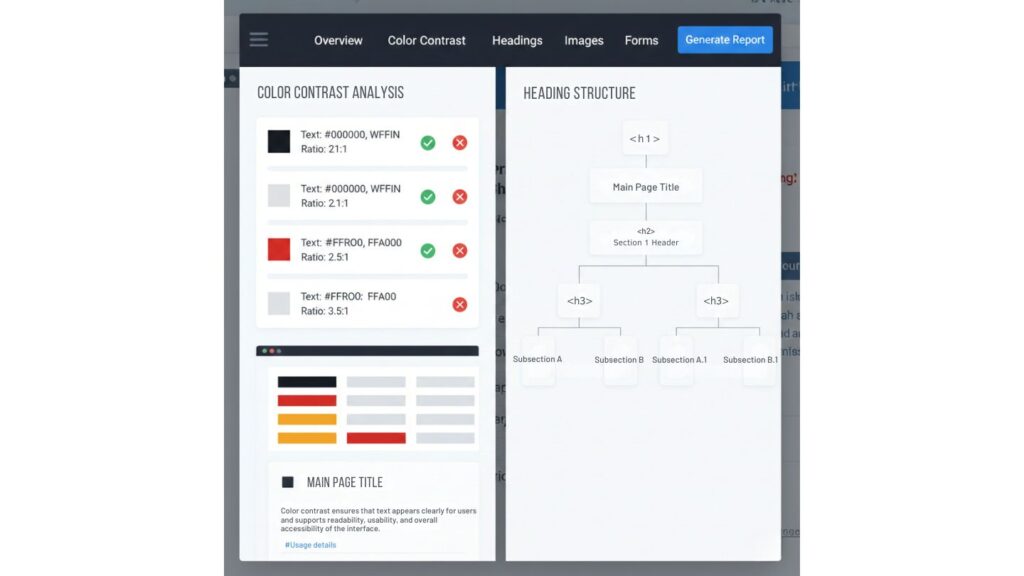
You do not need to be an expert developer to start. The first step is checking color contrast so text is easy to read for all users.
Make sure headings (H1, H2, H3) are used in a proper hierarchy. This helps screen readers map the page content correctly, and also makes the content structure easier for search engines to scan as part of accessibility.
Quick Checklist: An Inclusive Website in 5 Minutes
✓ Use relevant alt text on every image
✓ Make sure the color contrast ratio is at least 4.5:1
✓ Include transcripts or captions on video content
✓ Give clear labels to every form input
✓ Use ARIA attributes for complex interactive elements
✓ Test your website using only keyboard navigation
The Real Impact of Accessibility on Business
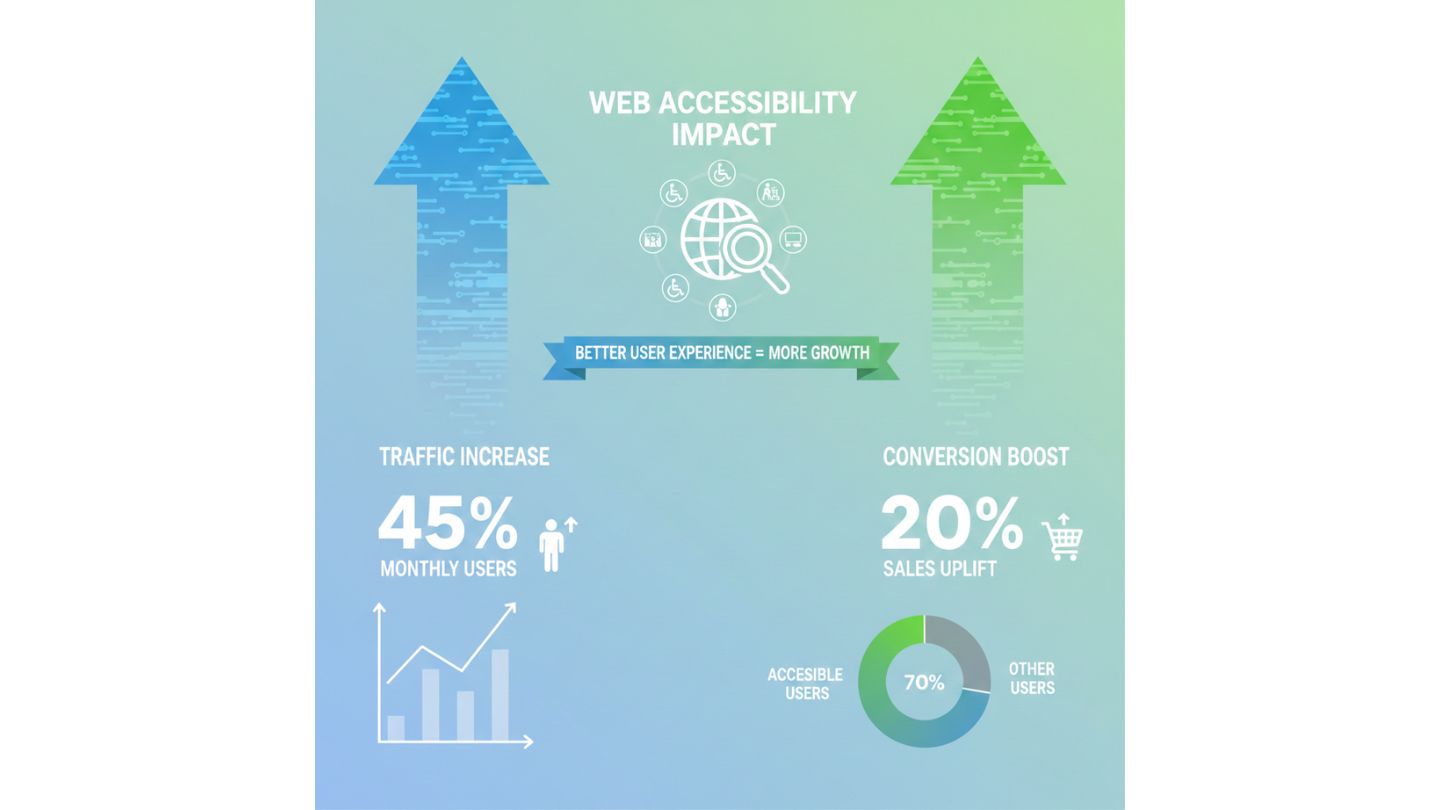
Data shows that about 15% of the world’s population lives with some form of disability. If your website is hard to access, you lose potential transactions from millions of people. This is closely tied to digital legal compliance, which is starting to be enforced in many countries.
Inclusive websites tend to have more efficient code, which improves page load speed. This is a competitive advantage: you care about user interaction, and search engines reward that effort. Inclusive design is a long-term investment in the future of your business.
Accessibility is not a cost burden, it is a long-term investment. A disability-friendly website is a future-friendly website for all users.
Time to Act for a More Inclusive Website
The digital era should be inclusive for everyone. By putting digital inclusivity first, you build strong brand credibility. Start small improvements today through the AODA framework or other global standards, and watch your website grow into a more professional and profitable platform.
Ready to Make Your Website More Inclusive?
Do not let your website be exclusive to only some people. Contact the professional Faveworks team for an accessibility audit and become a leader in your industry with an inclusive, SEO-friendly website!
For the official reference, visit W3C Web Accessibility Initiative.
Need help applying this strategy to your website? The Faveworks team is ready to help through our SEO services, with a free initial consultation.
Read Next
References:
- W3C Web Content Accessibility Guidelines (WCAG) Documentation
- Google Search Central Best Practices for Accessibility and SEO
- WebAIM The Million Website Accessibility Report for 2024